ServicesTankless Water Heaters
Tankless Water Heater Installation in La Vergne
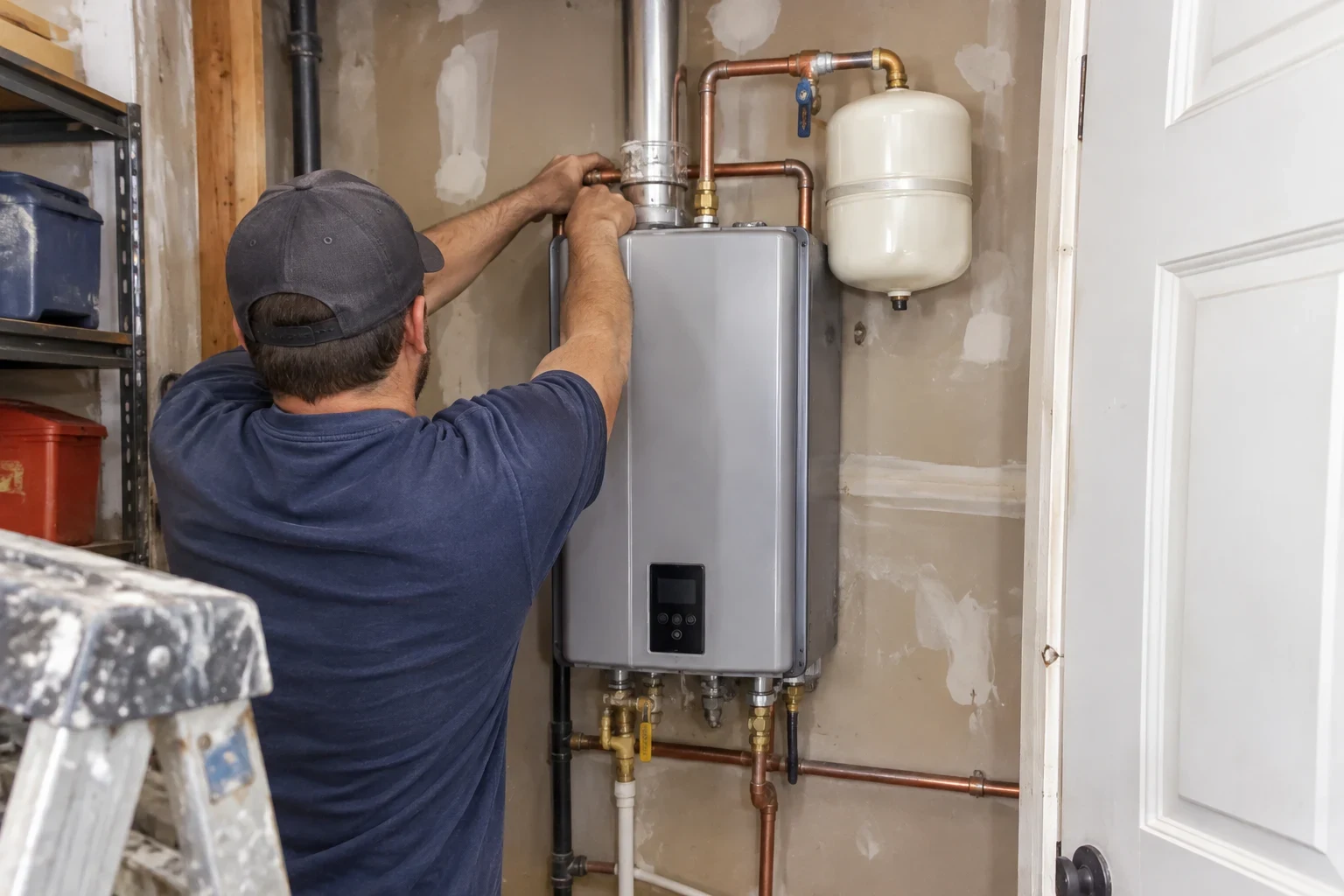
We install gas and electric tankless water heaters sized to how your home actually uses hot water. Before we recommend a unit, we check your gas line, venting path and electrical panel, so the heater keeps up in January and you know the full scope before any work starts.
When a Tankless Heater Makes Sense
A tankless heater fires only when a tap opens. A flow sensor detects water moving, the burner or elements kick on, and a heat exchanger raises the water to your set point as it passes through. There is no 40 or 50 gallon tank sitting at temperature all day, and no running out halfway through the third shower.
The catch is sizing. A unit's output depends on temperature rise, which is the gap between the water coming in and the water you want out. Incoming water is noticeably colder in winter, so a heater that handles two showers in July may only handle one in February. We size for the cold months.
It is a good fit when your tank is near the end of its life, when your household runs out of hot water, or when you want the floor space back. It is a poor fit if your gas service or electrical panel cannot support the load without costly upgrades, and we will tell you that plainly.
What the Installation Includes
- 01
Flow-rate sizing
We count the fixtures that might run at once and match gallons per minute to your winter temperature rise. That number, not the box label, decides the model.
- 02
Gas line check and resizing
A whole-house gas unit can draw up to 199,000 BTU per hour, far more than most tank heaters. Many existing 1/2 inch lines are too small, so we measure the run and upsize to 3/4 inch where the load calls for it.
- 03
Venting and condensate
Condensing units vent through PVC or polypropylene and produce acidic condensate, so we add a neutralizer before it reaches a drain. Non-condensing units need stainless steel venting rated for the higher flue temperatures.
- 04
Electrical for electric models
Electric tankless units often need two or three dedicated double-pole breakers. We confirm your panel has the capacity before recommending one.
- 05
Service valves and relief valve
We install an isolation valve kit so the heat exchanger can be flushed without cutting pipe, plus a properly piped temperature and pressure relief valve.
- 06
Old tank removal
We drain and haul away the old water heater and clean up the work area.
Questions about Tankless Water Heaters?
Call(615) 454-9146Signs It Is Time to Consider Tankless
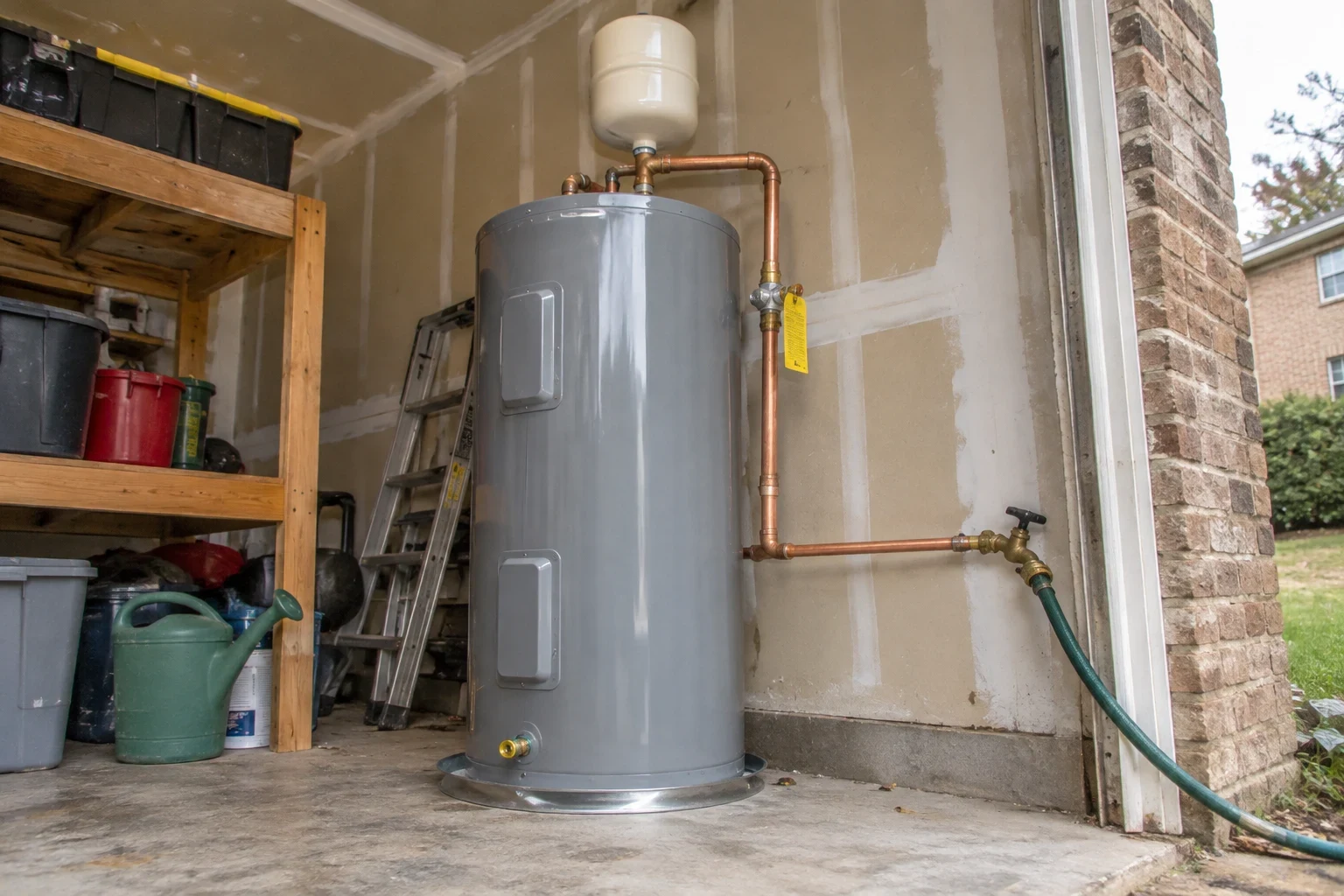
Your tank is 10 or more years old
Glass-lined steel tanks wear out as the anode rod is consumed and the steel starts to corrode. Replacing on your schedule beats replacing after a failure.
Hot water runs out
If the last person in the shower gets lukewarm water, the tank is undersized for your household or sediment has taken up part of its volume.
Rusty or rumbling water
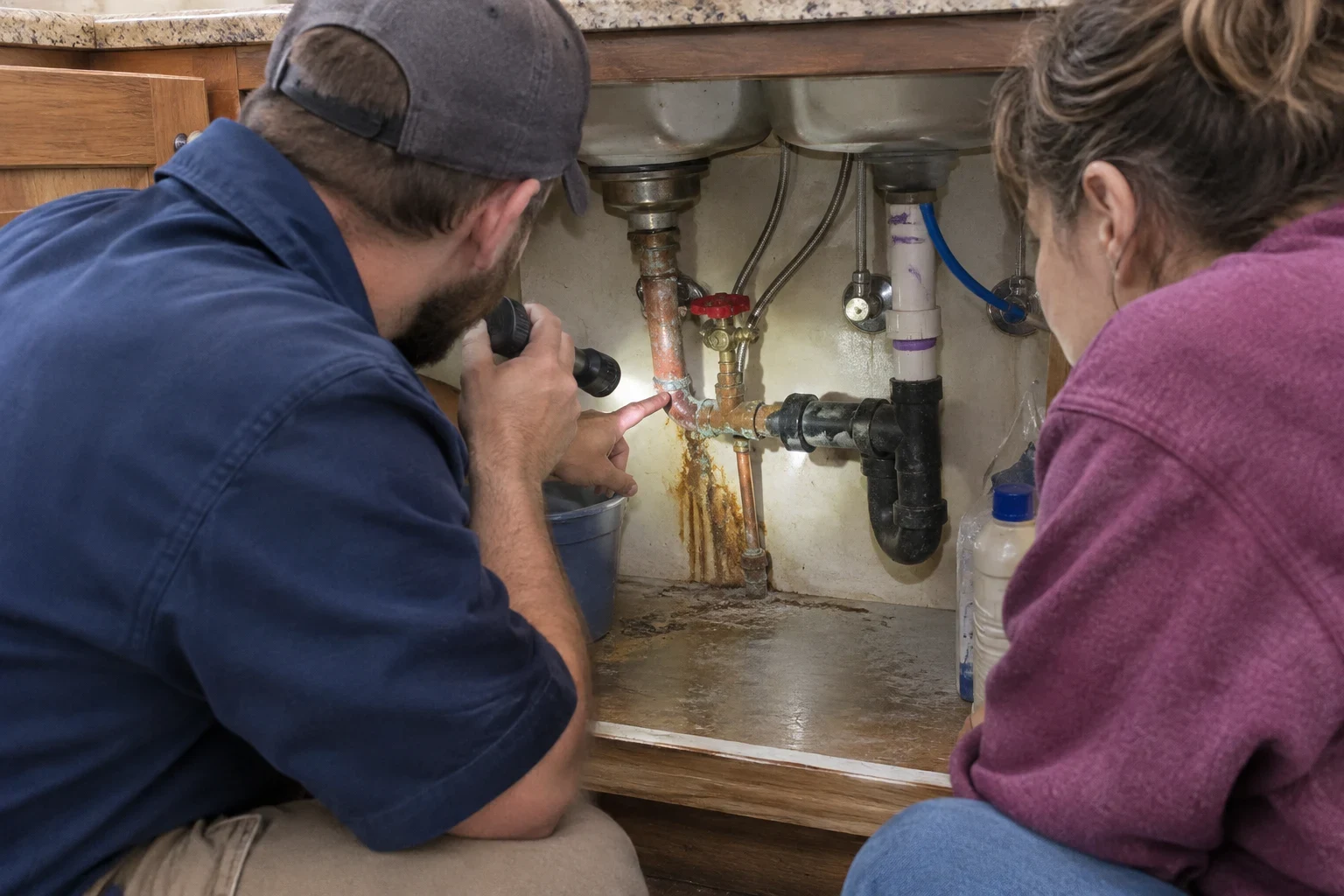
Brown hot water points to corrosion inside the tank. Popping and rumbling come from sediment layers that trap water against the burner and make it boil in pockets.
You need the space
A wall-mounted tankless unit frees up the closet or garage corner a tank occupied.
An addition or new bath
More fixtures mean more demand. That is a natural point to rethink how your home makes hot water.
How Install Day Runs
- 1
Site visit and written scope
We look at the existing heater, gas meter, venting route and panel, then explain which unit fits and what work it needs. The same people who quote the job are the ones who show up to do it.
- 2
Permit where required
Water heater replacements typically need a permit, and gas or venting changes always draw attention from the inspector. We pull it and schedule the inspection.
- 3
Removal and rough-in
We shut off gas and water, drain the old tank and remove it. Then we mount the unit, run the gas line, set the venting and pipe in the service valves.
- 4
Startup and testing
We purge the gas line, check for leaks at every joint, confirm combustion and flow, and set the temperature. Most homes are without hot water for part of one day.
- 5
Walkthrough
We show you the service valves, explain the flushing schedule and point out the error codes worth knowing.
What Moves the Price
A tankless install costs more up front than swapping a tank, and most of the difference sits in the work around the heater rather than the unit itself. Your estimate is free and lists each part of the job separately. We offer financing options and accept all major credit cards and cash.
- Gas or electric
- Gas units cost more to install because of venting and gas piping. Electric units are simpler to vent but can require panel work.
- Gas line upsizing
- The length of the run from the meter and how many fittings it passes through decide whether a new 3/4 inch line is needed and how much pipe it takes.
- Venting route
- A short run straight through an exterior wall is simple. Routing through a roof or across a finished ceiling adds labor and material.
- Unit capacity
- Larger homes with several bathrooms may need a higher-output model or two units linked together.
Tankless Water Heater Questions
How long does a tankless water heater last?
A well-maintained unit commonly runs around 20 years, roughly twice a typical tank. Maintenance matters most. Scale buildup on the heat exchanger is the main thing that shortens its life.
How often does it need flushing?
Plan on once a year, sooner if your water is hard. Flushing runs a mild descaling solution through the heat exchanger using the service valves we install. If scale is a recurring problem, our whole home water filtration work can reduce it at the source.
Will I really get endless hot water?
You get continuous hot water up to the unit's flow rate. If you open more fixtures than it is sized for, the temperature drops. That is why we size for winter demand instead of average use.
Why does the water sometimes go cold for a second?
That is often called a cold-water sandwich. Hot water left in the pipe comes out first, then a slug of cooler water passes before the burner catches up. Short gaps between uses cause it, and it is usually brief.
Can my existing gas line handle it?
Sometimes, but often not. We check the pipe size, the total length of the run and the other gas appliances on the line before giving you a number.
Ready to Size a Tankless Heater for Your Home
Tell us about your current heater and how many bathrooms you have. We serve La Vergne, Smyrna and nearby towns, and if your old tank has already failed, our crew handles plumbing calls around the clock.